Sandbox Powder Alchemy Element
- 4.7
- Rating
- 5.00M
- Installs
- Free
- Price

 Analysis by App-foxy
Sandbox Powder Alchemy Element is the kind of simulation game I open when I want to experiment without a fixed mission telling me what to do. Its appeal comes from watching powder elements interact, collide, spread, and create unexpected results on a blank playing area. Rather than presenting alchemy as a sequence of recipes to memorize, it gives me a small laboratory where curiosity is the main reason to keep playing.
That makes the game easy to approach, but not completely mindless. The most enjoyable moments come from forming a simple idea, testing it, noticing what changed, and then adjusting the setup. I would recommend it to anyone who likes physics sandboxes, visual experiments, or creative games that can be played in short sessions. I would be less likely to recommend it to someone looking for a campaign, a character-driven story, or a clearly defined list of objectives.
What the powder sandbox feels like in practice
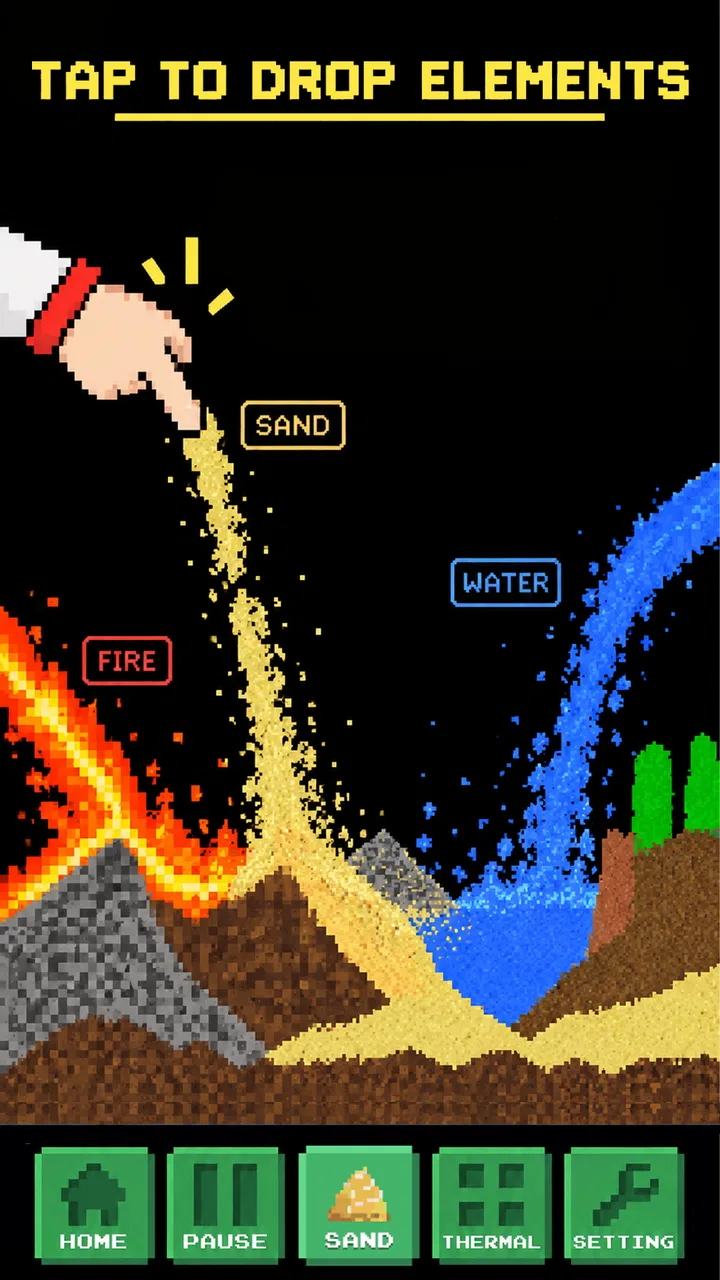
The central experience is deliberately open-ended. You work with powder elements and observe how they behave in an experimental space. The store summary frames it as a way to learn alchemy and physics, and that description matches the feeling I get while playing: the game turns basic actions into small demonstrations. I am not simply tapping through menus; I am arranging materials and waiting to see whether the result matches my expectation.
You May Also Like

 Google Keep - Notes and lists
Google Keep’s Quiet Growth Shows the Appeal of Simpler Notes
As mobile work gets busier, Google Keep keeps winning a simple contest: capture a thought quickly, find it later, and get on with the day.

 Blood Strike: 2.5 Anniversary
Blood Strike’s Loadouts Turn Every Drop Into a Tactical Gamble
A close look at Blood Strike’s custom loadouts: how fast access to signature weapons reshapes its battle royale rhythm, rewards preparation, and narrows the gap between fights.

 Pandora - Music & Podcasts
Pandora’s Music Is Easy to Start, but Harder to Recover
Pandora’s strength is its low-effort path from a seed to a station. Its weak spot is how much confidence it asks you to place in connection, setup, and quiet recovery.

 8 Ball Pool
 Is Built on Rivalries, Rematches, and Routine
A close look at the rivalries, rematches, shared routines, and unanswered safety questions that turn a quick pool match into a persistent mobile community.

 Samsung Music
’s Quiet Strength Is Playing What You Already Own
Its reach comes less from spectacle than from dependable access to a personal library. That simplicity is both the app’s strongest retention engine and its ceiling.

 AccuWeather: Weather Radar
AccuWeather Review: A Quick, Clear Forecast for Everyday Decisions
For everyday plans, the best forecast is the one you can understand quickly. AccuWeather makes rain timing, radar, and local conditions easy to act on, with a few trade-offs.
More From Our News Desk



For a first-time player, the lack of a traditional adventure structure may feel unusual. There is no obvious hero to improve or map to conquer. The reward is the experiment itself. A successful arrangement can be as simple as making one element reach another, separating materials, or creating a reaction that looks different from the starting layout. This is a quiet kind of progress, but it works well when I treat each attempt as a question rather than a challenge I must finish immediately.
The game comes from INWAVE GLOBAL and is available as a free download. It is rated for Everyone, which fits its approachable presentation and makes it suitable for family-friendly casual play. Optional purchases range from $0.99 to $19.99 per item, so I would still suggest checking the purchase flow before handing the device to a child. The free entry point is useful because you can discover whether this experimental style suits you before spending anything.
Its popularity also gives a useful clue about its audience. The game has passed 5 million installs, with a 4.7 average from around 68 thousand ratings. Those figures do not replace personal testing, but they suggest that the simple powder-and-element concept has connected with a large number of players. I can understand why: it is immediately visual, requires little reading, and lets a few spare minutes turn into a small creative session.
The best reason to try it
My favorite quality is that the game encourages observation. In many casual games, I know what will happen before I tap. Here, the interesting part is often the transition. A material may move more slowly than expected, collect in a different area, or interact with another element in a way that makes me rethink the arrangement. That uncertainty gives the sandbox more staying power than a simple drawing toy.
It is also a good fit for people who enjoy learning by doing. You do not need a formal lesson on physics to begin. Instead, you can make a rough test, compare the result with your mental model, and try again. Younger players may enjoy the visual cause and effect, while older players may appreciate the opportunity to build more deliberate experiments. The same screen can therefore support both casual play and more patient tinkering.
Getting started without feeling lost
After installing the game, I recommend resisting the urge to place many elements at once. The first useful session is much clearer when the screen contains only a small amount of activity. Begin by identifying where the available elements are selected and where the experiment takes place. Then choose one material and place a modest amount in an open area. This gives you a clean baseline and makes the result easier to read.
The first setup should be treated like preparing a tabletop experiment. Leave space between materials, avoid covering the whole screen, and watch what happens before adding another variable. If several elements are introduced immediately, it becomes difficult to know which action caused the visible change. Start with one question, not a complicated construction. For example, you might ask what happens when one powder is placed above another, then repeat the test with their positions reversed.
That approach is more useful than trying to guess every interaction from the beginning. The game is at its most satisfying when I build a small personal record of what I have observed. I do not need a written notebook, although keeping a few mental notes helps. If an arrangement works once, recreate it with one change. Move the starting position, alter the amount, or introduce a second material later. This turns random tapping into a simple investigation.
New users may also wonder whether they need to understand alchemy terminology before playing. I did not find that necessary. The practical language of the game is visual: place something, watch its path, and compare the outcome. The alchemy theme adds imagination, while the physics side makes the results feel grounded in movement and interaction. You can enjoy either side without studying a rulebook first.
Your first meaningful success
For a reassuring first win, I would create a small two-element test rather than attempting a large display. Place one material in a clear upper area and another below or beside it, leaving enough room to see movement. Let the scene develop, then look for a direct relationship: did one element travel toward the other, remain separate, spread differently, or produce a new visual result? The important achievement is not making the biggest effect. It is learning to predict one outcome more accurately on the next attempt.
Once you have seen a basic interaction, repeat it with a controlled change. If the first setup used a vertical arrangement, try a horizontal one. If you placed a narrow trail, try a wider patch. This is one of the game’s less obvious strengths: the same elements can become more interesting when the layout changes. The sandbox rewards arrangement as much as selection, so copying a known combination is only the beginning.
A practical everyday use case is a short break between tasks. I can open the game, run one small experiment, and close it without needing to remember a long quest or manage a complicated inventory. It also works as a shared activity with a child: one person can suggest a setup while the other places the elements, then both watch the result. Because the screen communicates through motion and color rather than lengthy instructions, the conversation stays focused on what is happening.
Another useful habit is to pause mentally before clearing a scene. If something unexpected occurs, inspect the layout first. The position, spacing, and order of placement may explain more than the element name alone. Clearing immediately can erase the clue that would help you reproduce the result. I found that taking a few seconds to study the final arrangement made later experiments more intentional.
Where new players commonly get confused
The open format can initially feel like a lack of direction. If you are used to simulation games with missions, you may wonder what you are supposed to complete. My answer is to define a small objective yourself. Try to make two materials meet, keep separate areas distinct, produce a repeatable reaction, or create a layout that behaves consistently. These self-made goals give the sandbox structure without taking away its freedom.
Another source of confusion is assuming that a visible result must be permanent or perfectly repeatable. Small changes in placement can alter the way a scene develops. That is not necessarily a flaw; it is part of the experimental character. Still, it means I would not approach every attempt expecting laboratory-level precision. The game is better at encouraging discovery than at replacing a serious physics simulator.
It is also easy to mistake a busy screen for a successful experiment. More powder does not automatically mean more interesting play. Large piles can hide the interaction you are trying to understand, while a crowded arrangement makes it harder to identify cause and effect. When a test becomes messy, I prefer to clear it and rebuild with fewer elements. That simple reset often teaches more than adding another layer to an already confusing scene.
Players who are sensitive to repetition should know that the game’s long-term appeal depends on enjoying experimentation itself. There is no guarantee that every session will feel fresh if you use the same arrangement repeatedly. I get more from it when I alternate between deliberate tests and playful designs. If you need constant unlocks, competitive rankings, or a strong narrative push, a conventional simulation or puzzle game may hold your attention better.
How it compares with familiar alternatives
Compared with a traditional alchemy puzzle, this game feels less like solving a recipe book and more like testing a small physical system. A recipe-focused alternative is better when you want clear combinations, definite answers, and a sense of completion. Sandbox Powder Alchemy Element is better when you want to decide what to test and accept that the result may be more interesting than the original plan.
Compared with a construction simulator, it is lighter and faster to enter. You do not need to spend a long session planning a building or managing a large project. That makes it a stronger choice for short breaks, but a weaker one if you want detailed resource management, extensive progression, or a persistent world. Its focus stays close to the powder experiment rather than expanding into a broader management system.
It also differs from a pure educational app. The physics ideas are encountered through play, not presented as a formal course with lessons and assessments. I think that is a strength for curious users who dislike classroom-style instruction, but it is a limitation for anyone needing structured explanations. Treat it as an interactive way to notice principles, not as a complete replacement for a textbook or guided science activity.
Small techniques that make experiments clearer
One technique I found especially helpful is to use the screen in stages. First, establish a starting arrangement. Second, observe the initial movement. Third, make only one change. This three-step rhythm prevents the common mistake of changing several things and then having no idea why the outcome differs. It also makes the game feel more thoughtful without making it slow.
A second technique is to design around empty space. Leaving a clear area is not wasted room; it gives moving powder somewhere to reveal its behavior. When I filled the scene too quickly, the visual information became harder to follow. With a deliberate gap, the direction and spread of an element were easier to notice. This is a small layout decision, but it improves both learning and presentation.
A third technique is to recreate a result from memory rather than treating every interesting moment as a one-off accident. If an interaction catches your attention, rebuild the general shape and change one detail. You may discover that the arrangement matters as much as the selected materials. That distinction is valuable because it shifts the game from collecting surprising effects to understanding how the sandbox responds.
Finally, use the game’s free access to judge your own patience honestly. Do not buy an optional item simply because a scene did not work immediately. First try changing the layout, reducing the number of elements, and repeating the test. If you still enjoy that process, the game is probably a good match. If experimentation already feels like work, additional content is unlikely to solve the underlying mismatch.
Performance, access, and who should skip it
The current version is 2.2.5, and the game supports devices running Android 6.0 or later. That makes it accessible to many older Android phones and tablets, although the experience can naturally depend on the device and how busy the experiment becomes. I would begin with modest scenes on an older device and increase the complexity gradually, especially if touch response or visual smoothness starts to feel less comfortable.
The Everyone rating makes it a reasonable choice for a shared family device, but the presence of in-app purchases means I would still supervise younger players around the purchase controls. Adults who want a calm, visual distraction will likely understand the game quickly. Children may enjoy the immediate movement, while science-minded players can use it to explore simple cause and effect. Players who need precise instructions, competitive goals, or a long-form story should probably choose another type of game.
My main limitation is the same quality that makes the game inviting: its freedom can become vagueness. The first meaningful success is easy to create once you set your own goal, but the game may not always tell you what to try next. I see that as an acceptable trade-off for a sandbox, not something to ignore. The right mindset is to arrive with a question and leave after learning something about the answer.
My recommendation after spending time with it
I think Sandbox Powder Alchemy Element is worth trying if you enjoy watching systems unfold and making small changes to see what follows. It is approachable, family-friendly, free to start, and distinctive enough to stand apart from ordinary puzzle menus. The strongest sessions are not about rushing toward a final result; they are about setting up a clear test, noticing an unexpected interaction, and improving the next attempt.
I would recommend it to a friend who wants a casual simulation with a creative edge, especially someone who likes physics toys but does not want a demanding construction game. I would skip it for a friend who needs a campaign, fixed objectives, or guaranteed variety every time they play. The open-ended design asks you to supply some of the motivation yourself.
For a first visit, keep the scene small, leave room around each material, and make one change at a time. That path removes most of the early confusion and leads quickly to the part that makes the game memorable. The real payoff is learning to turn a surprising result into a repeatable experiment. With that expectation, this simulation from INWAVE GLOBAL becomes a pleasant little laboratory rather than just another tap-and-watch distraction.
Overall, I see it as a thoughtful casual game with a clear identity. Its 4.7 average and broad audience are understandable, but the experience will depend on whether you enjoy creating your own goals. I had the most fun when I stopped asking what I was supposed to finish and started asking what I could learn from the next arrangement. For curious players, that is enough reason to give it a place on the phone.
FAQs for Sandbox Powder Alchemy Element
01What is Sandbox Powder Alchemy Element?
Sandbox Powder Alchemy Element is an interactive simulation game where users can experiment with various elements and watch them interact. The game provides a sandbox environment, allowing players to create, destroy, and modify their creations using elements like fire, water, and earth. It offers endless possibilities for creativity and learning.
02Is Sandbox Powder Alchemy Element free to download and play?
Yes, Sandbox Powder Alchemy Element is free to download and play on both Android and iOS platforms. However, the game may offer in-app purchases for additional features or elements. These purchases are optional, and players can fully enjoy the game without spending any money.
03What are the main features of Sandbox Powder Alchemy Element?
The game features a wide range of interactive elements, a user-friendly interface, and realistic physics. Players can mix and match elements to see unique reactions, use tools to manipulate their environment, and explore various scenarios. Regular updates ensure new content and elements are frequently added to enhance gameplay.
04Does Sandbox Powder Alchemy Element require an internet connection?
No, Sandbox Powder Alchemy Element does not require an internet connection to play. This makes it an excellent choice for users who want to enjoy the game offline. However, an internet connection may be needed for downloading updates or accessing certain online features and community content.
05Is Sandbox Powder Alchemy Element suitable for all ages?
Yes, the game is designed to be suitable for all ages. It offers educational value by allowing players to learn about element interactions and physics in a fun way. However, younger children may benefit from guidance to fully understand and explore the various features and interactions available.
Pros
- Highly interactive element combinations.
- Intuitive and easy-to-use interface.
- Regular updates with new features.
- Supports creative and educational use.
- Offline play available.
Cons
- Limited tutorials for beginners.
- Graphics could be more polished.
- Some features are behind a paywall.
- Ads can be intrusive at times.
- No multiplayer or social features.

Sandbox Powder Alchemy Element
Gallery